This is an old revision of the document!
Gnome
| Attributes | ||
|---|---|---|
 |
||
| Avg Life Span | 250 - 300 [Marks] | |
| Sexual Dimorphism | Yes | |
| Sexes | Male/Female | |
| Physiology | Organic | |
| Average Height | 60 - 90cm | |
| Average Weight | 30 - 45kgs | |
| Home System/Planet | Harl Quadrant, Technical 9 | |
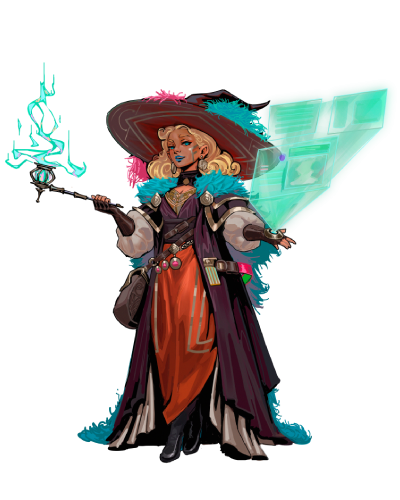
Gnomes, also known as Shorters, Halflings, Hobbits, Faefolk and Munchkins, are a small, enduring people shaped by proximity—to stone, to magic, and to places others were never meant to linger. Though they now commonly inhabit the Technicals — custom-built orbital stations and artificial habitats — their instincts remain subterranean. They are most at ease below the surface, in enclosed spaces threaded with tunnels, conduits, and layered architecture. This affinity is not merely cultural; it is a legacy of their origin on El-Swir, a world whose influence altered them so profoundly that even after being forced to leave it behind, no gnome is ever entirely untouched by its mark.
In stature, gnomes are compact and solid, standing between roughly 60 and 90 centimetres tall and averaging 30 to 45 kilograms in mass. Their proportions favour a surprising density over reach, with sturdy limbs and a low centre of gravity that lends itself well to climbing, crawling, and long periods of work in confined environments. Visually, they occupy an uncomfortable middle ground between other fae-descended peoples: they bear the large, sharply pointed ears and angular chins associated with elves, alongside the rounded faces and prominent facial hair common among dwarves—particularly in males. This resemblance often leads to misidentification, a mistake gnomes find persistently irritating.
Sexual dimorphism is present and broadly similar to that seen in humans and dwarves. Males tend to be slightly larger and more muscular, with greater overall body and facial hair. Females typically develop wider hips and fuller chests, features associated with child-rearing, and often have softer, more rounded facial structures. Gnomes are moderately long-lived by Federation standards, with lifespans averaging between 250 and 300 Marks. Their bodies are efficient and resilient: they see well in low light, tolerate cramped conditions with ease, and require relatively little food and water to sustain themselves — despite a cultural reputation for hearty appetites and frequent meals.
Gnomish skin tones are warm and earthy, ranging from pale whites and creams through pinks, soft tans, yellows, and browns, often with a natural redness or freckles, concentrated near the cheeks, nose, and ears. Hair colours follow similar natural palettes: sandy yellows, deep browns, blacks, and occasional reds or oranges reminiscent of fresh clay or autumn leaves. Their most striking feature, however, is their eyes. All gnomes possess a faint internal luminescence within the eyes — an arcane glow visible even in darkness. These hues span blues, greens, reds, yellows, purples, and stranger shades that resist easy classification. Many believe this glow emerged only after the exodus from El-Swir, a lingering resonance from a world steeped in magic and ruin. Whatever its origin, it is unmistakable: a quiet reminder that El-Swir, though abandoned and best forgotten, still watches through every gnome who survived it.
Culture
Gnomish culture, like that of most Federation peoples, is inseparable from the world that shaped it — and from the catastrophe that destroyed that world. Gnomes were among the earlier races encountered by Elven and Atlantean explorers and joined the Federation relatively early in its formation. Even then, they were known for restless curiosity and an instinctive urge to tinker, dismantle, and rebuild. This inquisitiveness placed them at the centre of early Federation experimentation, particularly when a volatile mineral — N’yarlathocyte — was discovered in dense asteroid clusters far from settled space. When volunteers were sought, it was the gnomes who stepped forward.
The consequences of those experiments reshaped both the Federation and the gnomish people forever. Initial research into N’yarlathocyte laid the theoretical groundwork that would eventually lead to D’jump technology, forming the backbone of interstellar travel in every era that followed. At the same time, those same experiments triggered the event now known as The Collapse, rendering the gnomish homeworld of El-Swir fundamentally unstable. What remains of the planet no longer obeys consistent laws of time or space and is considered uninhabitable. Much of the precise sequence of events is classified under the authority of the Gnomish Bureau of Containment, but the effects reach far beyond redacted reports. Records decay, images blur, and even spoken memories of the planet’s surface grow unreliable. Most unsettling of all, no one can recall what El-Swir was called before the Collapse — a gap that resists explanation by censorship alone.
In the wake of this loss, gnomish culture turned inward rather than outward. Family and togetherness became central values, though “family” is defined broadly, encompassing blood relations, long-term companions, and adopted kin. Gnomes tend to live in large, interconnected households, sharing resources freely and placing strong emphasis on communal meals. Feasting, storytelling, games, and performance are common fixtures of daily life, serving both as entertainment and as a means of reinforcing bonds. Even grief is often processed collectively, softened by ritual, humour, and shared presence.
This communal warmth is paired with a distinctive sense of playfulness. Gnomes are fond of tricks and pranks, not as acts of cruelty, but as social language. The most famous of these traditions is the Rite of Returning, in which a gnome temporarily takes an item from another household — historically something noticeable but not vital — only to return it later, providing a socially acceptable excuse for another visit and another shared meal. In modern contexts, this practice has become ritualized; many households leave out bowls of keycards or harmless trinkets to be taken and returned. That said, when frustration is involved or no offering is provided, gnomes are perfectly willing to escalate, selecting something far more inconvenient, such as a climate control device or an entire supply of hygiene paper. Through humour, closeness, and a refusal to let isolation take hold, gnomes have endured what should have erased them — together.
Role in the Federation
Gnomish presence within the Federation is so pervasive that it is often overlooked. As an intensely communal people, gnomes rarely act in isolation, and it is uncommon to find a major achievement, expedition, or disaster in Federation history that did not include gnomish participants. From early exploration crews to long-term infrastructure projects, gnomes have consistently embedded themselves wherever cooperation, adaptability, and persistence were required. Their contributions are rarely singular or grandstanding, but they are everywhere — quietly integral to how the Federation functions.
Among their most significant institutional legacies is the Gnomish Bureau of Containment (GBC), founded in the aftermath of the Collapse of El-Swir. The GBC exists to investigate, contain, and mitigate phenomena that fall outside accepted Mundane, Digital, or Astral classifications. While most Federation citizens are comfortable operating within these three frameworks, the GBC operates on the assumption that reality contains more — forces, entities, or events originating from elsewhere, or perhaps from concepts that defy categorization entirely. Over the Ages, the Bureau has responded to innumerable anomalies, often arriving first and leaving last. Its reputation is mixed: widely respected for preventing catastrophe, and quietly distrusted for its heavy use of redaction, information control, and appeals to “public safety.” Since the privatization of Federation institutions, criticism of the GBC’s secrecy has only intensified.
Beyond containment and crisis response, gnomes are celebrated as refiners rather than originators. While many landmark technologies trace their roots to Elven theory, Dwarven engineering, or D'jinn innovation, gnomes are the ones who make these ideas usable. They specialize in improvement through iteration: lighter materials, more efficient power storage, clearer interfaces, better ergonomics, and subtle quality-of-life enhancements that accumulate into transformative change. Across the Federation, countless everyday tools bear the quiet mark of gnomish refinement, even when their originators are forgotten.
This talent proved decisive during the final days of the Federation’s egalitarian trade era. When two Dwarven clans developed competing designs for a D’jumpship, both heavily supported by gnomish funding and technical expertise, one design was ultimately abandoned. Rather than dismantle it, gnomish engineers preserved and reworked the discarded concept, reshaping it into The Innovation. Though smaller than any other D’jumpship, it became the only vessel capable of traversing the full span of known space in a single D’jump. As trade networks faltered and systems teetered on collapse, the crew of The Innovation delivered resources and coordination at impossible speed, preventing the Federation from fracturing in its final pre-capitalist days.
In the modern era, gnomish influence has followed the same path as most Federation cultures, consolidating into a corporate entity: Philo’s Groove. Officially an entertainment and electronics giga-corporation, it is best known for immersive home and vehicular entertainment systems, subscription-based media platforms, and ubiquitous social networks. Unofficially, it is infamous for producing functional, affordable imitations of nearly any device ever invented — often with added features no one asked for, such as embedded chronometers. Through containment, innovation, and cultural saturation, gnomes remain one of the Federation’s most indispensable peoples, shaping the galaxy not through dominance, but through presence.
Rules
Below you will find the unique rules and stats you will need to fill out your character sheet.
Stat Block
Mundane Stats
Perceptions
Mystical Stats
Miscellaneous Stats
Your [Entity Type] is: [Sapient]
Your [Physiology] is: [Organic]
Your Size is: 2
Please Note: For information on ranking up [Stats] see: Spending Experience.
Unique Features
Being Small is Awesome!
Gnomes are small, and they have turned that fact into an advantage so thoroughly that it borders on art. Their size makes them quick, elusive, and difficult to pin down, but the real benefit is access: spaces too narrow, low, or unstable for others are simply routes to a gnome. Pipes, vents, crawlspaces, service tunnels, and subterranean passages become highways rather than obstacles. On a practical level, their scale is also efficient — clothing and armour are cheaper to produce, rarely custom, and require fewer resources, while cyberware costs less due to reduced structural and power demands. Across the Federation, gnomes have proven that mass is overrated, and that being small is, in fact, awesome!
Trait.
You gain a 50% price decrease on Apparel and a 25% price decrease on Cyberware, rounded down.
In addition, when calculating the [Total] number of [Crew] or [Passengers] on a [Vehicle], you only count as half, rounded up. Therefore, if another [Character] with [Being Small Is Awesome!] is serving as [Crew] or a [Passenger], then you only count as 1, in [Total]. However, you still require a single [Console].
Furthermore, you may also gain bonuses, where Appropriate, when traversing doorways, corridors, entering public vehicles and anywhere your size might be advantageous. This may include but it not limited to being able to fit places where others can't, or using up less space or even gaining the effects of the Advantage Property.
Rite of Returning
The Rite of Returning is a long-standing gnomish social custom centred on movement, memory, and hospitality. A gnome will deliberately take an item from another household or person — traditionally something noticeable but not essential — with the understanding that it will be returned at a later time. The act is not theft, but invitation: a reason to come back, to share food, conversation, and presence once more. In modern practice, many households accommodate the rite by leaving out bowls of keycards, business chips or small objects intended to be taken and later returned, though the choice of item can become more pointed when emotions are involved or expectations go unmet. To outsiders the practice can appear mischievous or invasive, but among gnomes it serves as a socially accepted mechanism for maintaining bonds, expressing feelings indirectly, and ensuring that no connection fades without at least one more visit.
Trait.
Gnomes are cultural tricksters, they ritually steal items, typically small and not useful, only to return them to the original owner. This practice is usually met with a gift, often food and drink. It is quite a compliment in Gnomish society, some even considered it good manners. However, it can also be used to express frustration or rudeness by taking an item of value, usually, something that one might need more than financial value, like cutlery or a door stop.
Please Note: While this rite is acknowledged by the Federation, it is still technically theft. Fed. Sec. Officers will likely be lenient, but Federation Citizens can press charges.
Natural Arcanists
All gnomes carry a quiet, persistent resonance of the arcane, a legacy most believe was sealed into them during the Collapse of El-Swir, though some insist it predates that event entirely. Arcana comes to gnomes not as something studied first, but as something used — handled with the same casual confidence they apply to tools, games, or conversation. Many pursue formal training at arcane universities such as those of the Aeonis Compact, but education merely refines what is already there. Spells are cast with ease, mana flows naturally, and arcane effects are treated as practical solutions rather than solemn rituals. The faint glow in a gnome’s eyes is not a warning or a threat; it is simply proof that magic, for them, is ever-present — an echo of a broken world, carried lightly and wielded without hesitation.
Trait.
You gain a free rank in [Arcana] during Character Creation. In addition, you don't gain a rank 1 [Arcana] [Ability] when gaining this free rank as normal. Instead you must choose one of the following [Ability] packages to receive the benefits from:
- Package 1: You gain the rank 1 [Arcana] [Ability]: [Magical Training] and 1 free rank in a [Skill] of your choice.
- Package 2: You gain the rank 1 [Arcana] [Ability]: [Spell Specialty]. This will allow you to also acquire a rank 1 [Arcana] [Spell] [Ability] of your choice.
- Package 3: You gain the rank 1 [Arcana] [Ability]: [Invocation Specialty]. This will allow you to also acquire a rank 1 [Arcana] [Invocation] [Ability] of your choice.
Please Note: You can only ever acquire a single “Specialty” [Ability]. If you choose one of the two above, during [Character Creation] then you can't gain any other “Speciality” ]Abilities].
In addition, as you progress your [Job] ranks, you gain the following benefits:
- At [Job] rank 2, you gain a free rank in [Arcana] up to a max rank of 2, and gain the free [Ability] as normal, or you can gain two free [Arcana] [Abilities] of rank 2 or lower.
- At [Job] rank 4, you gain a free rank in [Arcana] up to a max rank of 3, and gain the free [Ability] as normal, or you can gain two free [Arcana] [Abilities] of rank 3 or lower.
- At [Job] rank 6, you gain a free rank in [Arcana] up to a max rank of 4, and gain the free [Ability] as normal, or you can gain two free [Arcana] [Abilities] of rank 4 or lower.
- At [Job] rank 8, you gain a free rank in [Arcana] up to a max rank of 5, and gain the free [Ability] as normal, or you can gain two free [Arcana] [Abilities] of rank 5 or lower.
- At [Job] rank 10, you gain a free rank in [Arcana] up to a max rank of 6, and gain the free [Ability] as normal, or you can gain two free [Arcana] [Abilities] of rank 6 or lower.
Please Note: A [Job] rank refers to your [Total] ranks in all of your [Jobs] combined, not just the ranks in a single [Job]. If you have 10 different ranks in 10 different [Jobs], you are [Job] rank 10.