This is an old revision of the document!
Human
| Attributes | ||
|---|---|---|
 |
||
| Avg Life Span | 150-200 [Marks] | |
| Sexual Dimorphism | Yes | |
| Sexes | Male/Female | |
| :Game Mechanics:Definitions:Physiology]] | Organic | |
| Average Height | 150 - 200cm | |
| Average Weight | 75 - 100kgs | |
| Home System/Planet | Sol System, Earth | |
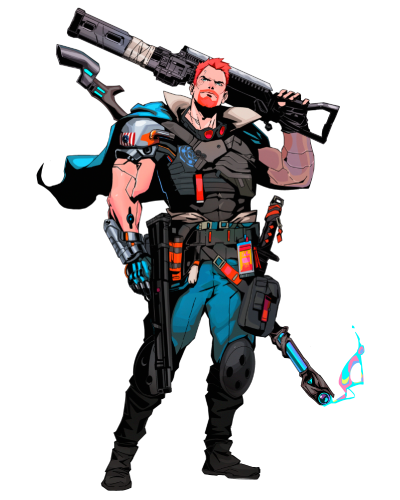
Humans, also known as Soggies, Solarans, Lucksacks, or Earthlings, are a naturally evolved, organic mammalian species originating on Earth, the third planet of the Sol system. Adult humans typically range from approximately 1.5 to 2 federation standard mass inits in height, with mass commonly falling between 75 and 100 federation standard distance units, though individual variation outside these ranges is well documented. They possess a bilateral body plan optimized for upright locomotion, with an average lifespan of roughly 150–200 Marks under stable environmental conditions.
Human physiology is defined by bipedal movement supported by two lower limbs, while two upper limbs are adapted for manipulation, tool use, and fine motor control. Their skeletal structure balances flexibility and durability, allowing endurance-based activity rather than extreme specialization. As mammals, humans regulate internal body temperature metabolically and nourish offspring through live birth and postnatal care. Sexual dimorphism is present, expressed primarily through differences in average body mass, height, muscle distribution, and secondary physical traits, though these distinctions are moderate rather than extreme.
Humans are broadly similar in stature to elves, if somewhat larger on average, but feature distinctly uncommon features compared to many of the sapients in the federation. Their ears are small and rounded, lacking the elegant taper most folk consider typical, and their facial structures tend toward the soft and blunt rather than sharp or angular. Humans commonly grow coarse body and facial hair; many males cultivate dense growth across the jaw and cheeks, while females often show lighter but still noticeable hair along the limbs or face, a trait humans themselves rarely remark upon. Their features are more strongly sex-differentiated than elven norms, with broader variance in build, voice, and musculature, lending them a markedly less androgynous appearance. Taken together, humans appear earthbound and expressive, less sculpted, perhaps, but unmistakably robust and vividly individual.
Humans display a wide range of external colouration, most notably in skin tones that span earthy hues such as pale beige, tan, brown, deep umber, and near-black, with variations influenced by ancestry and environmental adaptation. Hair growth occurs primarily on the scalp, with texture, colour, and density varying widely across individuals. Additional hair growth is common on limbs and torso, particularly among males, who on average exhibit greater overall hair density than females. While males tend to be somewhat larger and heavier than females, the overlap between sexes is substantial, and physical capability varies more strongly between individuals than between sex categories.
Culture
Human culture is defined less by continuity than by accumulation. Across their recorded history, humans have formed, dismantled, and re-formed social structures with remarkable frequency, often within the span of a few generations. Empires rise, fragment, and are repurposed; belief systems evolve, fracture, and recombine; traditions persist even as their original meanings are forgotten. To outside observers, this creates the impression of a species in constant negotiation with itself, forever revising the terms under which it chooses to live together.
One feature that appears with striking consistency is humanity’s mercantile orientation. Regardless of political structure, tribal, imperial, feudal, communal, or republican, human societies tend to organize themselves around systems of exchange, surplus, and obligation. Wealth, whether measured in currency, land, labour, or abstract credit, becomes tightly bound to authority and status. Even cultures that explicitly reject profit as a virtue often develop intricate mechanisms for redistribution, taxation, or tribute. To many non-human observers, this fixation appears excessive; to humans, it is largely invisible, treated as a practical necessity rather than a defining trait.
Human social behaviour is further characterized by a strong tension between cooperation and competition. They form families, communities, and nations with deep emotional bonds, yet readily stratify those same groups through hierarchy, prestige, and comparative success. Identity is frequently layered, individuals may define themselves simultaneously by kinship, occupation, belief, and economic position. While this produces internal friction, it also grants human societies a high tolerance for contradiction, allowing conflicting values to coexist without immediate collapse.
Perhaps most unusually, humans as a species exhibit an outsized relationship with chance. Events that would be considered statistical anomalies elsewhere occur among humans with notable regularity: improbable survivals, unlikely victories, cascading accidents that resolve favourably despite poor initial conditions. Within human culture, these occurrences are often mythologized as personal grit, destiny, or coincidence. From a broader comparative perspective, however, humanity appears to operate under a persistent ambient fortune, one so evenly distributed that most humans perceive themselves as merely average, unaware that their baseline success rate would be considered exceptional by many Federation species.
Role in the Federation
Humanity entered Federation awareness under circumstances that were both irregular and, in hindsight, defining. During a Draeckonian frontier survey of the Milky Way region, command authority rested with Lord Marshal Shade Shadowscale, whose mandate required observation and reporting of any potentially sapient civilization. At the time of contact, humans had only recently achieved limited spaceflight and were not considered a strategic concern. In violation of first-contact protocols, Shadowscale ordered a preemptive assault intended to eliminate the species before formal recognition could occur.
What followed was a brief but costly campaign that defied conventional projections. Human forces, operating with minimal interstellar infrastructure, relied on decentralized command, rapid improvisation, and asymmetric tactics to delay and disrupt Draeckonian advances. Compounding this failure was a factor later noted repeatedly in Federation analyses: the statistical improbability with which human units survived engagements and converted minor advantages into decisive outcomes. The Draeckonian fleet sustained losses disproportionate to the scale of resistance, forcing Shadowscale to report the engagement. She was formally reprimanded and later removed from command through internal Draeckonian assassination rites. Humanity was subsequently recognized as a sapient species under Federation law, receiving reparations and an invitation to join.
Several centuries after accession, the Federation faced a systemic crisis of scale. Expansion had strained the existing egalitarian trade framework and the reliance on large, centralized D’jumpships. Transit delays increased, peripheral systems faltered, and economic cohesion weakened. Human delegates proposed a structural alternative derived from long-standing practices on Earth: Captialism. Through human-led investment, Thool Rigs were constructed across key routes, enabling smaller vessels to mount reduced D’jump drives and shifting transit costs onto corporate networks.
The resulting transformation ushered in a prolonged period of prosperity across multiple galaxies, later referred to as the Thool Rig Expansion Era or the Rigging Boom. Trade volume increased, access widened, and mobility normalized in ways previously thought unsustainable. Leveraging this success, humanity secured a seat on the High Council, the most recent species to do so, and the only one admitted without presenting a monumental D’jumpship. Instead, humans offered infrastructure, commerce, and interconnected trade corridors. While some Federation members resent the speed of humanity’s ascent and others attribute it to fortune rather than strategy, for most sapients, they care not, so long as the Thool highways remain open and the journey to a Big Macca's Burgers remains available.
Rules
Below you will find the unique rules and stats you will need to fill out your character sheet and play the game.
Stat Block
Mundane Stats
Perceptions
Mystical Stats
Miscellaneous Stats
Your [Entity Type] is: [Sapient]
Your [Physiology] is: [Organic]
Your Size is: 5
Please Note: For information on ranking up [Stats] see: Spending Experience.
Unique Abilities
Human Spirit
Humans are touched by fortune in a way that defies probability rather than bending it. Favoured by the Lady of Luck herself, their lives accumulate small advantages that compound into impossible outcomes. Trains arrive just in time, critical messages surface when needed most, and enemy weapons jam at the exact moment it matters. For much of their history, humans mistook this for coincidence or grit, unaware that fate itself leaned gently in their favour. Through their close bond with the Devlin peoples, humanity learned to recognize, focus, and ultimately command this blessing — not as blind chance, but as wilful momentum. When a human commits fully to an outcome, reality has a habit of agreeing. Across the Federation, this truth is widely understood: never corner a species that fate refuses to abandon.
Trait.
At the end of each Scene, you restore 1 spent Grit Point, as if you had [Rested].
Please Note: If you do end the Scene with a [Rest], you will not restore an additional Grit Point.
Mageblind
Humans lack the innate sensory apparatus required to perceive magic directly, a condition they share with the Dwarven peoples and one that places them at a marked disadvantage within a Federation where arcane awareness is common. They can observe magical effects — a conjured flame, a warped structure, a body altered by force — but the underlying currents, pressures, and fluctuations of the astral medium remain invisible to them. For much of their early history, this absence led humans to dismiss magic as myth, fraud, or misunderstood science. Even now, while humans are capable of wielding magic through training and tools, they often struggle to anticipate hostile spellwork or perform subtle manipulations without assistance. In response, they have developed scanners, symbolic frameworks, containment sigils, and entire sciences devoted to measuring what they cannot feel. While some humans master magic in spite of this, it is difficult for many, often preferring the overt magics.
Trait.
When you perform the Counterspell [Action], it costs two additional Mana instead of one.
In addition, you cannot perform [Wild Magic] [Actions], nor can you perform the Cantrip [Action] without first acquiring an instance of the [Magical Training] [Ability].