This is an old revision of the document!
Dwarf
| Attributes | ||
|---|---|---|
 |
||
| Avg Life Span | 400 - 500 Years | |
| Sexual Dimorphism | Yes | |
| Sexes | Male/Female | |
| Physiology | Organic | |
| Average Height | 100 - 120cm | |
| Average Weight | 200 - 250kgs | |
| Home System/Planet | The Niflheim Belt, Helmsteinn | |
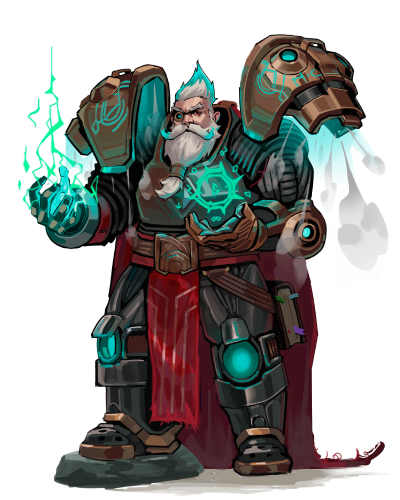
Dwarves, as known as Vikes, Shorters, Barrels and Odinspawn, are a compact yet imposing people, defined less by height than by mass, endurance, and sheer physical presence. Standing on average between 100 and 120 centimeters tall, they nonetheless carry extraordinary weight, typically between 200 and 250 kilograms, packed into dense, resilient bodies with a heavy, bone structure comprised of more minerals than is common. Their build favours breadth over height, with thick torsos and powerful frames that can make some dwarves appear nearly as wide as they are tall. This density is not decorative muscle, but layered, slab-like strength evolved for sustained labour: lifting, bracing, hauling, and working for unbroken spans of time without fatigue.
Dwarven musculature is typically concealed beneath healthy layers of fat, rounding their forms, providing additional protection and granting them a more barrel-like physique. These deposits serve practical purposes, cushioning against impacts, resisting crushing forces, and increasing survivability in subterranean disasters such as collapses or pressure shifts. Their bodies are adapted not for speed or agility, but for stability and persistence, once a dwarf is set in place, it is difficult to move them by force or circumstance alike.
Facially, dwarves present broad, flattened features with wide noses and rounded, heavy-set faces. Their skin is thick and leathery in texture, displaying tones that echo winter stone and worked earth: pale tans, greys, deep browns, and dark leather hues. Their ears taper to subtle points, less pronounced than those of elves but unmistakably sharing a distant fae lineage. Hair colour tends toward darker shades, deep browns, blackened tones, and warm gingers, and facial hair is common and culturally significant. Beards, moustaches, and heavy eyebrows are widespread, particularly among males, though females may also grow facial or body hair to varying degrees.
Sexual dimorphism among dwarves is minimal and primarily functional. Females are generally comparable in size and mass to males, differing mainly in reproductive anatomy rather than overall build. The most visible distinction is hair growth: males are typically far hairier across the head, face, arms, chest, and legs, while females commonly exhibit reduced or absent hair in these areas. Otherwise, dwarven bodies resist easy categorization, reinforcing the perception, both internal and external, of a people shaped by uniformity rather than contrast.
Many non-dwarves claim difficulty telling individual dwarves apart, a notion dwarves themselves neither deny nor particularly resent. Among their own people, it is often said, half in jest, half in reverence, that they were all made from the same mould. While ancient beliefs that dwarves were literally shaped from stone have largely fallen out of favour, echoes of these traditions persist. Conformity in appearance, fashion, and even entertainment remains common, not as a lack of individuality, but as an expression of shared origin and collective identity. To a dwarf, resemblance is not erasure, it is proof of belonging.
Culture
Dwarven culture is founded on stone, both literal and metaphorical. Their homeworld of Helmsteinn and their unwavering devotion to truth are so closely intertwined that many dwarves consider them the same thing expressed in different forms. Dwarves are capable of lies, and will bend language when haggling, posturing, or defending personal honour, but there is a sharp distinction between what is spoken and what is set. Anything written, recorded, or carved, especially in stone, must be exact, complete, and unassailably true. This principle governs contracts, records, and above all, oaths. To a dwarf, an oath is not a promise of intent but a declaration of reality, and to break one is to deny the truth itself.
As a result, dwarves approach agreements with extreme caution. They do not commit lightly, but once bound, they consider the obligation absolute. Oathbreaking is regarded as the gravest of crimes, surpassing even murder or theft in moral weight. It makes no difference whether the betrayal harms a nation or a single individual; a broken oath fractures trust in the same way regardless of scale. Dwarven justice reflects this worldview, treating all such breaches as acts of treason against the social fabric itself. This reputation for rigid honesty makes dwarves slow negotiators, but once an agreement is reached, it is considered among the most reliable in the Federation.
Their cultural conservatism is rooted in catastrophe. Helmsteinn is not a planet in the traditional sense, but a vast, hollow asteroid within the Niflheim Belt. For countless generations, dwarves expanded outward through its stone, carving homes, halls, and industries in every direction. This expansion ended abruptly during the Hrungluppa, roughly translated as the Cave Collapse, when unchecked tunnelling breached the asteroid’s outer shell. Atmosphere vented into vacuum, and thousands perished before the damage could be sealed. Survival came only through rapid ingenuity, sacrifice, and the application of powerful Dvergrcraft, but the lesson was permanent: progress without caution is lethal.
Since then, dwarves have approached change with deliberate restraint. New ideas are tested slowly, systems are reinforced beyond necessity, and innovation is adopted only when its risks are fully understood. Some speculate that without the Hrungluppa, dwarves might have been the first to explore the stars, reshaping the course of history long before the elves ever left Avalon. Dwarves themselves rarely indulge such speculation. To them, history is what is carved into stone; all else is conjecture, and distraction. What matters is endurance, truth, and the certainty that what is built today will still stand tomorrow.
Role in the Federation
Dwarven contact with the wider galaxy predates their entry into the Federation by many Ages. In the aftermath of the Hrungluppa, the development of vacuum-controlling runes allowed dwarven craft to survive beyond the stone shell of Helmsteinn, granting them access to open space long before conventional interstellar travel was widespread. This early expansion brought them into contact with the Jötunn, a colossal people whose individuals rivalled great halls in scale. The meeting was catastrophic. The Jötunn had already devastated their own world through reckless technological and magical excess, ignoring mounting environmental collapse until escape was their only option. When dwarves attempted to assist with evacuation and stabilization, the Jötunn responded with betrayal, seeking to seize dwarven resources and infrastructure for themselves.
The resulting conflict marked the first true interstellar war fought by the dwarven peoples. Forced to abandon their traditional restraint, they forged weapons on a scale previously unnecessary, turning their mastery of stone, metal, and rune into instruments of survival. The war ended not in annihilation, but exile. The dwarves defeated the Jötunn and expelled them from the region aboard vessels the dwarves themselves provided — a decision reflecting both pragmatism and an unyielding adherence to oath and responsibility, even toward an enemy. The lesson endured: caution alone was not enough, and generosity without vigilance invited disaster.
Many Ages later, dwarven explorers encountered Federation envoys. Initial contact was tense, shaped by hard-earned suspicion, but diplomacy prevailed, reinforced by something dwarves trusted deeply, trade. Commerce, craft exchange, and shared engineering projects gradually replaced hostility. Even so, the dwarves were slow to formally join the Federation, choosing instead to observe, evaluate, and negotiate from a position of independence. When they finally acceded, it was on their own terms. With significant support from the gnomish peoples, they constructed a D’jumpship of unprecedented scale and permanence. Starhold, vast and monumental, was both a technological achievement and a cultural statement. Upon its completion, the dwarves entered the Federation immediately as a council race of significance.
Starhold’s construction also left a quieter legacy. One of the dwarven designs abandoned during its development was later reclaimed and reworked by gnomish engineers, eventually becoming a separate D’jumpship, an outcome many dwarves still regard, with mixed pride and irritation, as an extension of their own ingenuity. Since joining, dwarves have served as a stabilizing force within the Federation: advocates for caution, continuity, and adherence to old agreements in an era increasingly shaped by speed and profit. Their record is not without stain, their involvement in the Geode Genocide, a disastrous first contact with the Oricalcai peoples, stands as proof that even deliberate cultures can err. Nevertheless, the dwarves remain among the strongest defenders of the Federation’s founding values. In the modern age, this role is embodied by the Vigilance Mining Guild, now a giga-corporation but once the ruling clan of the dwarven people, and still the longest-standing institution in their culture, unchanged in name, if not in form.
Rules
Below you will find the unique rules and stats you will need to fill out your character sheet.
Stat Block
Mundane Stats
Perceptions
Unique Features
Slow But Steady
Dwarves are not built for speed; they are built to endure weight. Their broad frames, immense density, and low centre of gravity allow them to lift, brace, and operate equipment that would overwhelm most other species, often with surprising ease. Tools, armour, and machinery far beyond their apparent scale become manageable in dwarven hands, not through explosive power, but through stability and leverage. The cost of this strength is momentum, dwarves do not move quickly, nor do they accelerate easily, and they rarely outrun what they cannot outlast. Where others charge ahead, dwarves advance with certainty, carrying the load until the work is done.
Trait.
You treat your Brawn Stat 2 higher than it is for the purposes of meeting Item Requirements.
However, you reduce your Speed by 1, to a minimum of 1.
Indomitable Gait
Once a dwarf commits to forward motion, stopping them becomes a theoretical problem rather than a practical one. They may never move faster than a steady jog, but they do not slow, stumble, or yield to interference. Broken ground, crushing force, hostile magic, suppressive fire, none of it meaningfully impedes a dwarf who has decided to advance. Their mass, balance, and sheer refusal to give ground turn resistance into background noise. Dwarves are not driven by bursts of motivation, but by resolve, and resolve does not waver. The only thing more dangerous than a charging dwarf is a calm one who has already decided where they are going.
Trait.
Effects can't cause you to generate more or less MP.
In addition, effects can't modify the amount of MP you need to spend to move, positively or negatively. This includes but is not limited to Difficult Terrain and other, similar effects, as Appropriate.
Dvergrcraft
Dwarves do not experience magic as mystery or revelation. Like humans, they lack the instinctive perception of arcane flow, but unlike humans, they never mistook that limitation for absence. Descended from fae, magic runs through dwarven blood. not as intuition, but as principle. To a dwarf, there is no meaningful distinction between arcana and machinery. A lightning bolt cast from the hand and one drawn from a capacitor obey the same truth: the universe has rules. Whether those rules are written in physics or spellwork is irrelevant. Dwarves don't just cast spells in the traditional sense; they construct, bind, inscribe, and channel. Fire is not summoned, it is engineered. Power is not invoked, it is harnessed. Where others wield magic, dwarves build it, bolt by bolt, rune by rune, until the impossible becomes reliable.
Trait.
You do not have the Magic Skill. You can't gain Ranks in it, nor can you use it for Rolls. Anytime you use it for a Roll or Ability, you replace it with the Tech Skill instead.
In addition, if you choose a Job that doesn't have Tech on it's list of possible Proficiencies in it's [Starting Package], then you add it to that list.
Please Note: You do not gain an additional Proficiency. You gain an extra option to choose from.
Stonekin
Dwarves are renowned for their resilience, both physical and mental. Their flesh bears a stony density unlike any other Elvenoid, their bones are heavily mineralised, and their bodies are built to endure punishment that would leave others broken. Just as formidable is their resolve. Dwarves rarely panic, seldom tire and possess a stubborn determination that has become the stuff of legend. They are not invincible, but once a Dwarf has decided to keep going, convincing them otherwise is often the harder battle.
Trait.
You gain 2 Armour and 5 Ward.
In addition, you gain the Sturdy, Stubborn and Composure Abilities.
Mechanised Form
Dwarves were the first people to develop what the Federation now calls cyberware, finding little philosophical divide between flesh, stone, and steel. Their bodies, already dense and mineral-heavy accept mechanical replacement with remarkable ease, particularly when injury demands it. Limbs, organs, meat, and structural supports are routinely rebuilt rather than healed, and such modifications rarely disrupt function or identity. While mana can struggle to settle comfortably in dwarven physiology, the introduction of additional metal poses no such problem; arcane instability does not worsen when chrome replaces bone. To a dwarf, steel is simply another kind of rock — and replacing a broken part with a stronger one is not transgression, but good sense.
Trait.
You reduce the Ward Tax by 2 and Mana Tax by 1 of all Cyberware you install, to a minimum of 0.
Mageblind
Dwarves do not see magic in the way most Federation peoples do. They can observe its effects — heat, force, distortion — but the flowing currents, subtle harmonics, and shifting structures of the arcane remain largely imperceptible to them. Where others sense magic as presence or pressure, dwarves experience only outcome. This blindness has been mistaken for weakness, certainly, but it has shaped their entire relationship with the arcane. Unable to feel magic directly, dwarves learned to measure it, bind it, inscribe it, and contain it through runes, mechanisms, and engineered systems. While this makes them slower to react to hostile spellwork in its early stages, it also frees them from arcane distraction. Dwarves do not marvel at magic — they account for it, brace against it, and build something solid enough that it does not matter whether they saw it coming or not.
Trait.
You cannot perform the Cantrip, Wild Evocation, Wild Invocation or Wrath Abilities from the Basic Ability list.
Changelog
Version 0.5c - June 2026
- Stoneskin Ability renamed to Stonekin.
- Stonekin Ability now also provides 5 Ward
- Stonekin no longer provides the Rugged Ability
- Stoic Mentality Ability removed and it's effects were rolled into Stonekin
- Mageblind no longer interacts with Counterspell.
- Mageblind now prevents you from using Cantrip, Wrath, Wild Evocation and Wild Invocation.