This is an old revision of the document!
Tipua
| Attributes | ||
|---|---|---|
 |
||
| Avg Life Span | 10 - 15 [Marks] | |
| Sexual Dimorphism | No | |
| Sexes | N/A | |
| Physiology | Organic | |
| Average Height | 15 - 30cm | |
| Average Weight | 5 - 10kgs | |
| Home System/Planet | Rūaumoko Nexus, Hinewalla | |
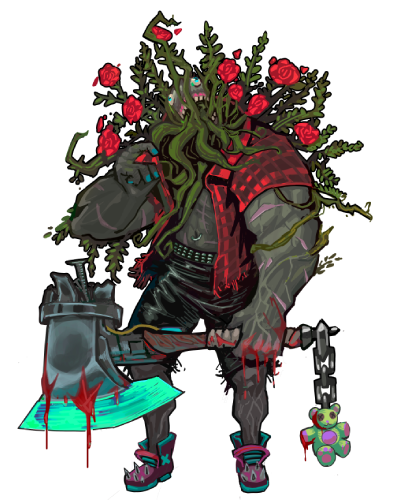
Tipua, also known as Bloomers, Moldies and Deadwoods, are among the most unusual peoples of the Federation, occupying a space between organism and memory, between plant and person. In their natural state, they are not fully sapient. They exist as living growths more akin to flora than fauna, rooted, photosynthetic entities composed of stems, fibrous structures, and leaf or flower-like formations used to absorb light and sustain themselves. In this state, Tipua possess only limited awareness, guided by instinct, mild telepathic impulses, and an exceptionally strong genetic memory that carries the accumulated impressions of countless prior generations.
This changes during an optional but transformative phase of adolescence. At this stage, most Tipua will seek union with a meat-based living entity, but many will not be successful, dying out. The proportionally few that succeed in such a union, using vivid floral displays and subtle psionic influence, to lure a potential host into close proximity, encouraging contact, coaxing the host to place the growth against their head or upper body, beginning the bonding process. The Tipua is capable of a single, sudden lunge, driving hardened root-structures toward the host’s central nervous system. If these roots successfully integrate, a struggle for dominance begins. Failure means death for the Tipua; success results in the dissolution of both original forms and the emergence of something new.
The resulting being is neither plant nor host, but a fusion of both. The Tipua absorbs a majority of the host’s memories, instincts, and learned behaviours into its genetic continuum, even if some is lost, while the host’s body becomes the physical vessel of the new entity. This process is irreversible. Completion of the union typically takes 24–30 hours, after which the original host is definitively deceased. The Tipua survives, now fully sapient, carrying forward not only its ancestral memory but also the lived experiences of the host. While the plant component can survive destruction of a body and later claim another host, the host cannot survive separation from the Tipua once bonding has occurred.
Before Federation contact, Tipua primarily bonded with the non-sapient creatures of their homeworld, Hinewalla of the Rūaumoko Nexus. These unions produced beings capable of movement and simple tool use, but culture remained tribal, communication relying heavily on telepathy, magic and instinct rather than spoken or written language. True sentience emerged only after first contact, when Tipua bonded with Federation explorers. The fusion of vast genetic memory with fully developed social cognition produced the first modern Tipua — beings capable of self-reflection, language, and participation in interstellar society. Though this period was marked by loss, the memories of those first true hosts persist within the Tipua people to this day.
Physically, sapient Tipua appear as small plant-like organisms — typically 15 to 30 centimetres in height and weighing only a few kilograms, integrated into the flesh of their host species. The plant growth most often encircles or crowns the head, where it can best absorb light and draw nutrients directly from the host’s brain or equivalent processing organ. Plant and flesh merge into a shared physiology, indistinguishable at the point of union. In this state, Tipua lifespans expand dramatically, often drawing close to or potentially matching that of their hosts, extending from mere Marks into full Ages. What begins as a rooted growth ends as a living archive: a single body carrying the memories of many lives, layered and alive.
Culture
Tipua culture exists in layers, shaped as much by what might be as by what is. The vast majority of Tipua never take a host. They remain as plant-life, living out simple cycles of growth, nourishment, seeding, and decay. These Tipua are not considered incomplete or lesser; they are simply unawakened. Their genetic memory, vast, ancient, and detailed, lies dormant beneath instinct, waiting for the conditions required to surface. These Tipua do not have culture so much as potential, waiting to be tapped. Tipua do not mourn those who never advance beyond this state. From their perspective, this is efficient, natural, and correct. As long as a single seed survives, the lineage continues, and with it, the memories of what came before, reborn not as copies, but as continuity.
The moment a Tipua completely merges with a host, however, everything changes. That union does not merely create a sapient individual, it creates a new branch of Tipua existence. The memories, instincts, values, and experiences of the host permanently alter the genetic record, influencing all descendants that grow from the seeds of that union. In rare cases, Tipua born of particularly dominant personalities develop strikingly similar traits across generations, as though a single will echoes forward through time. More commonly, the host’s memories reshape the Tipua so profoundly that no two awakened Tipua are alike, even when descended from the same ancestral line. To Tipua, individuality is not a contradiction of continuity, but its most meaningful expression.
Once awakened, Tipua integrate into Federation life much like any other people. They concern themselves with sustaining their host bodies, pursuing interests, forming relationships, creating art, earning credits, and navigating the everyday complexities of society. They are not defined by inherent morality or alignment; they are as capable of kindness, cruelty, joy, grief, ambition, and doubt as any other sapient race. Though the host body is technically deceased flesh animated and sustained by the plant entity, it retains full functional capacity, allowing Tipua to live seamlessly among other species.
Tipua psionic traits make them particularly adept communicators. They often gravitate toward roles that benefit from empathy, perception, and layered understanding — diplomacy, law, mediation, magical disciplines, therapy, and the arts. Their perspectives are shaped by multiplicity: the long memory of the Tipua lineage and the intensely personal experiences of their host. Responses to this duality vary. Some Tipua maintain close relationships with the host’s family and friends, honouring shared memory and continuity. Others find such ties overwhelming or inappropriate, choosing instead to form entirely new identities and social circles. Both paths are culturally accepted. To the Tipua, growth does not require clinging to the past, but neither does it demand forgetting it.
Role in the Federation
Tipua participation in the Federation has never been unified by territory or ideology, but by survival and continuity. For much of their history, Tipua did not conceive of themselves as a nation at all. Instead, they existed as dispersed lineages and local collectives, bound loosely by shared biology and memory rather than governance. Early interaction with the Federation revolved around a central point of tension: the right to take hosts. Some Tipua fought to preserve traditional hunting grounds, where unions occurred as they always had, while others advocated for emerging practices that allowed sapients across the Federation to willingly donate their bodies, ensuring their memories would persist in a new form. This divide was never clean, and still, both ideologies remain strong in the culture to this day.
Formal unification came only after catastrophe. In later Epochs, a group of Tipua researchers attempted to solve ethical and logistical concerns surrounding hosts by creating cloned bodies for implantation. The results were disastrous. Hosts without lived experience produced malformed Tipua, beings with severely diminished mental capacity, capable only of basic labour or violence. These creations, later known as Ramat Warriors, were weaponized by a radical faction that attempted to force a galaxy-wide unity by implanting Tipua into all sapients, believing a shared memory-network would end conflict permanently. The Ramat Wars, as they become known, came close to shattering both Tipua society and the Federation itself.
The crisis ended not through annihilation, but through memory. A coalition of Federation peoples, from all federation races but predominantly the orcish peoples, entered active Tipua regions and allowed themselves to be taken as hosts. Through these unions, their memories, strategies, and values flowed directly into newly awakened Tipua, enabling coordinated resistance against the Ramat leadership. Telepathic communication and shared experience allowed hostilities to cease without genocide, and the Ramat program was dismantled. The creation of such beings is now universally condemned within Tipua culture as an unforgivable violation of continuity and personhood.
In the aftermath, surviving Tipua scientists reorganized with a singular purpose: to ensure such transgressions could never occur again. This group spearheaded the construction of the Tipua D’jumpship, securing Tipua recognition as a sovereign people and earning them a seat on the High Council. Their research pivoted toward preservation rather than domination, producing major breakthroughs in cryogenic stasis and long-term biological stability. In the modern, privatized era of the Federation, these efforts coalesced into BioTopia Ltd, a powerful pharmaceutical and medical conglomerate with deep cultural ties to Tipua values. Though its reach now extends far beyond medicine, BioTopia’s origins remain a reminder of the line Tipua once crossed, and the lengths they went to ensure it would never be crossed again… or so their marketing says.
Rules
Below you will find the unique rules and stats you will need to fill out your character sheet.
Stat Block
Mundane Stats
Perceptions
Mystical Stats
Miscellaneous Stats
Your [Entity Type] is: [Sapient]
Your [Physiology] is: [Organic]
Your Size is: 1
For information on ranking up [Stats] see: Spending Experience
Unique Features
Host Body
Sentience for the Tipua is not something one is born into, but something entered. In their natural state, Tipua exist as living growths guided by instinct and inherited memory — aware, but unfocused. The act of merging with a sapient host changes this forever. Through union with a mind shaped by language, culture, belief, and lived experience, the dormant genetic memory of the Tipua blooms into full awareness. The resulting being is neither plant nor host, but a synthesis of both, permanently altered by the thoughts, values, and emotional structures of the life it absorbed. For some, this union is predatory, achieved by luring a host close through vivid floral displays and psionic influence before a violent struggle for control. For others, it is consensual and ritualized, performed with the dying or recently dead so that memories and knowledge might endure. Either way, the transformation is profound — and never without loss.
The mechanics of the merger are slow and vulnerable. A Tipua may bond with many kinds of meat-based life, provided the body is moist and living enough for roots to take hold and draw water and nutrients. Once the central root network breaches the flesh and interfaces with the host’s primary nervous system, the process takes roughly 24 – 30 hours to complete. During this time, the Tipua is exposed; in non-consensual unions, resistance can delay integration, and intervention may still save the host if the Tipua is destroyed. Completion is final. The host’s body ceases to live as its own entity, its soul passing into astral space, while its memories, instincts, and learned reflexes remain—woven into the Tipua. For this reason, Tipua often retreat to places of safety and abundant light during the merger, sustaining themselves while the union settles.
When the process ends, there is only one being. Memory becomes shared history, reflex becomes blended instinct, and the resulting Tipua often exceeds the capabilities of either origin alone. Having lived as another and retaining powerful telepathic perception, Tipua tend toward deep empathy and emotional nuance. Most perform only a single union in their lifetime, forming an identity inseparable from that host. Though additional unions are possible, the practice is rare and widely regarded as disturbing; those who seek ever “better” hosts are viewed with suspicion or horror. Removal of the Tipua is fatal to the host body without exception. Among the Tipua people, the immense diversity created by different hosts — across species, cultures, and ways of thinking — is considered a strength, and one of the greatest legacies their kind carries forward.
[Trait].
You must always have a host body. You can survive roughly 24 to 48 hours without one. Any meat based life form, as [Appropriate] can be used as a host but the bond is less secure if a bond is made with a non-sapient creature.
You can bond peacefully or forcefully to any living creature that is mostly made of meat, or a recently dead corpse. If the corpse has started to decay to the point where the structural integrity of the meat has begun to fail, it is too old to bond with. This typically occurs around 10-20 days after death, depending on the conditions the body has been kept in.
For a peaceful bond to be made, the sapient must either be consenting or dead. This doesn't require any [Checks], [Attacks] or [Saves], since the host is not attempting to resist the bond.
All other attempts to bind a host are forceful and then you must try to overpower them to force a bond. You will perform a Sense Attack against a mutually [Perceieved] [Character's] Will_Save. If you are successful, the bond attempt is successful and the process will begin.
Either way, the bond will complete in 24 hours, at which time the host will die. The host can be saved if you are killed and removed before that time. You could choose to release the host, cancelling the bonding process, but once the bonding process has started, if the connection is broken before the bond is complete, for any reason, then you will gain the [Death] [Injury].
Once the bond is complete, It will take you some time to adjust to your new body. When the bond is complete, you gain the New Meat Injury:
| New Meat |
|---|
| Injury Severity: 80 |
| While under the effects of New Meat Injury, you suffer the effects of the Disadvantage [Property], [Upgrading], on any Checks, Attacks or Saves you perform. In addition, you don't gain the benefit of the hosts' Perceptions until the Injury is healed. Furthermore, you are unable to take a new host until the Injury is healed |
Once you have started the bond, you can't fully control the host's body as if it was your own. Usually, you will want to take the host body to somewhere private, usually with a light source to feed off, until the a full [Period] has passed. Should this not be the case, you and the Host will fight for control of the body. At the start of each Scene, Encounter or Turn, as Appropriate for the [Situation], you will perform a Sense [Attack] against the Host's Will_Save for control. The winner of this contest will be in control of the Character until the next struggle for control, as [Appropriate].
Once the bond is complete, or you are currently in control, you are able to use the host's Brawn and Agility as if it were your own. Additionally, regardless of who is in control of the host body, you will be able to replace your Visual Perception and Size with that of the Host Body. However, you will not again the benefits of these perceptions until the [New Meat] [Injury] is healed, as detailed above.
Should you take an Injury that refers to something only a body would have, it applies to the host body. While you can heal the host body, certain injuries, such as limb loss and other injuries of this kind cannot be fixed or healed. The Host Body will only be able to heal anything it could in life.
Wounds are kept on the host body. If you take a new host, you inherit any Wounds that Host Body had accrued before being bonded. Conversely, when you leave an old host, or you suffer the [Meat Death] [Injury], you lose all Wounds. This is not true for Scars or Wounds suffered from the [Catastrophic Meat Death] [Injury].
During Character Creation, you must choose a host body you are bonded with. This will be your chosen host until it becomes too damaged to continue to sustain you or you choose to undergo the dangerous process of binding with a new host. You must choose any one of the following hosts:
| Human | |||
|---|---|---|---|
| Brawn | Agility | Size | Visual Perception |
| Starter: 5 Max: 9 | Starter: 5 Max: 9 | 5 | Average |
| Traits | Lucky: You gain 1 to starter Grit. | ||
| Orc | |||
|---|---|---|---|
| Brawn | Agility | Size | Visual Perception |
| Starter: 6 Max: 12 | Starter: 5 Max: 9 | 5 | Average |
| Traits | Tough Host: You gain the [Sturdy] [Ability]. | ||
| Elf | |||
|---|---|---|---|
| Brawn | Agility | Size | Visual Perception |
| Starter: 4 Max: 7 | Starter: 7 Max: 13 | 4 | Acute |
| Traits | Frail Host: When generating an Injury you gain a +5 to the Total. | ||
| Gnome | |||
|---|---|---|---|
| Brawn | Agility | Size | Visual Perception |
| Starter: 3 Max: 5 | Starter: 5 Max: 9 | 2 | Acute |
| Traits | Frail Host: When generating an Injury you gain a +5 to the Total. Being Small Is Awesome: See Being Small Is Awesome. |
||
| Dwarf | |||
|---|---|---|---|
| Brawn | Agility | Size | Visual Perception |
| Starter: 6 Max: 11 | Starter: 3 Max: 5 | 4 | Acute |
| Traits | Tough Host: You gain the [Sturdy] [Ability]. Slow But Steady: See Slow But Steady. |
||
| Devlin | |||
|---|---|---|---|
| Brawn | Agility | Size | Visual Perception |
| Starter: 4 Max: 7 | Starter: 4 Max: 7 | 5 | Average |
| Traits | Lucky: Gain 1 to Starter Grit. Tough As Jerky: See Tough As Jerky. Astral Sight: You gain Acute [Astral] [Perception]. |
||
| Draeck | |||
|---|---|---|---|
| Brawn | Agility | Size | Visual Perception |
| Starter: 5 Max: 12 | Starter: 5 Max: 12 | 5 | Acute |
| Traits | Unlucky: Lose 3 to Starter Grit. Four Arms: See Four Arms. |
||
| Troll | |||
|---|---|---|---|
| Brawn | Agility | Size | Visual Perception |
| Starter: 9 Max: 21 | Starter: 4 Max: 7 | 9 | Acute |
| Traits | Tough Host: Gain the [Sturdy] [Ability]. Too Big! You Pay Extra! See Too Big! You Pay Extra!. |
||
Psionic
Tipua possess innate psychic faculties, allowing them to sense intentions, read surface thoughts, and communicate directly mind-to-mind. This communication rarely takes the form of structured language; instead, Tipua share impressions as lived experience — memories, images, sounds, emotions, even scent and sensation. These abilities exist even in their plant-like state, enabling them to detect approaching minds, influence behaviour, coordinate growth, and signal conditions such as weather shifts or fertile seeding cycles across a colony. Upon taking a host and gaining full sentience, these psionic talents deepen significantly, becoming more precise, expressive, and emotionally nuanced. This constant exposure to the inner lives of others fosters a natural empathy, making Tipua particularly suited to roles that rely on understanding, mediation, and emotional insight.
Trait.
You gain a free rank in [Ecokinesis] during Character Creation. In addition, you don't gain a rank 1 [Ecokinesis] [Ability] when gaining this free rank as normal. Instead you gain the [Telepathy: Read Intent] [Ability] and your choice of a free rank in a [Skill] of your choice or the [Ecokinetic Speciality] [Ability].
Please Note: You can only ever acquire a single “Specialty” [Ability]. If you choose one during [Character Creation] then you can't gain any other “Speciality” ]Abilities].
In addition, as you progress your [Job] ranks, you gain the following benefits:
- At [Job] rank 2, you gain a free rank in [Ecokinesis] up to a max rank of 2, and gain the free [Ability] as normal, or you can gain two free [Ecokinesis] [Abilities] of rank 2 or lower.
- At [Job] rank 4, you gain a free rank in [Ecokinesis] up to a max rank of 3, and gain the free [Ability] as normal, or you can gain two free [Ecokinesis] [Abilities] of rank 3 or lower.
- At [Job] rank 6, you gain a free rank in [Ecokinesis] up to a max rank of 4, and gain the free [Ability] as normal, or you can gain two free [Ecokinesis] [Abilities] of rank 4 or lower.
- At [Job] rank 8, you gain a free rank in [Ecokinesis] up to a max rank of 5, and gain the free [Ability] as normal, or you can gain two free [Ecokinesis] [Abilities] of rank 5 or lower.
- At [Job] rank 10, you gain a free rank in [Ecokinesis] up to a max rank of 6, and gain the free [Ability] as normal, or you can gain two free [Ecokinesis] [Abilities] of rank 6 or lower.
Please Note: A [Job] rank refers to your [Total] ranks in all of your [Jobs] combined, not just the ranks in a single [Job]. If you have 10 different ranks in 10 different [Jobs], you are [Job] rank 10.
Meat Death
Tipua physiology does not obey the expectations of meat-based life. Once a union is complete, the host body is no longer truly alive; it persists as a vessel, sustained and regulated by the Tipua’s root network rather than by its original biological systems. Many organs function only partially or not at all, with detoxification, repair, and cellular direction handled by the plant entity instead. This makes injury unpredictable. Wounds that would be fatal to others may be inconsequential if they damage redundant tissue, while seemingly minor trauma can be catastrophic if it disrupts a vital root structure. During the Ramat Wars, this reality was learned the hard way: the most effective way to kill a Tipua is not to target the body it wears, but to shoot the plant bits.
[Trait].
When performing an Injury Test, you use the following table instead:
Ash's Aside
The Tipua are a kind've wild race to play. For most characters they are just a character, that's half dead, with a psychic plant sticking out it's head. It exists so people can play something weird and whacky. It's for people that want to play something undead, or as close to it a zombie-like thing as you can get while still being alive and having thoughts and feelings. For many, that'll be enough and for y'all, have at it. Tipua are awesome!
That being said, there may come a few strange issues to solve with Tipua. The first thing that I want to say, to DM's out there, you may feel an urge to ban Tipua because you don't want to deal with host swapping. While you can, if you wish, I would strongly recommend you don't. Gaining a new host isn't that different to any other Injury, and it can be very moving and even spiritual to role play. It also can create some interesting scenes where a Tipua may effectively attend their own funeral, not something you get to portray all the time. Another issue can arise due to Cyberware. It is intended to lose the Cyberware attached to a host when it dies. This is offset by gaining new cyberware on a new host, but also, there isn't any reason why a proper licensed (or un-licensed) professional can't remove the cyberware from the old host and install it onto a new host, provided their is time to do so. This is also offset by getting a cool new host, with upgraded Brawn and Agility, as those will be lost and gained, from a host dies. This can cause an effective loss of Exp, or a gain, depending. This is the point of playing a Tipua. CM's, if you sign up for a Tipua Character, you do so understanding that Meat Death is a real thing that can happen, and DM's you know that it's part of the ride. If negative feeling arise as a result of this, have a conversation about it, but losing a host and getting set back is supposed to be a downside.
Also, while you can gain new hosts, and you can even play a Character that is extremely motivated to gain the best host possible, it is commonly expected for gaining a new host to be a pain in the arse. Feel free to do so, but have a discussion with the other Players to make sure people are on board for your body snatching fiesta you plan to cause. It could be fun, but it may also detract from the stories the other Players might want to tell. Another factor is meat based hosts that aren't listed about. You may encounter many different sapient races or meat based life out there that are wildly different from the typical player races. You are allowed to attempt to take them as hosts, but there may be various complications. For starters, you should try to avoid taking a non-sapient host as it may become [Apprpriate] to remove your Social Perceptions and potentially remove your ability to communicate or even reducing some of your other mental and social Stats. I am not going to say to not take non-traditional hosts, as your table may find it compelling, but I would advise against it unless you all okay with some homebrew. Tipua have a strong aversion to doing so, and you should too. As for how to take a non-standard host, you follow the rules above, and then if you are successful, gain their Brawn, Agility, Size and Visual Perceptions as normal. Then, I would discuss any innate Abilities the host has and grant the newly created Tipua a positive one and a negative one, if possible. You may wish to reduce the potency of the abilities, much like how a Troll host provides the Sturdy Ability instead of the Regeneration Ability they are known for.
All in all, Tipua can be whacky, and may require some custom rulings from time to time, but I implore all Players, CM's and DM's alike to just have fun with it. And if things are progressing in a way that's getting too odd or somewhat off topic, have a discussion as a group to find a fun middle ground for everyone involved. Plant zombies are cool, in my humble opinion.